BMW M3 E46: SMG versus factory manual — separating conversion cars
BMW M3 E46: SMG versus factory manual — separating conversion cars
By BidBud • October 9, 2026
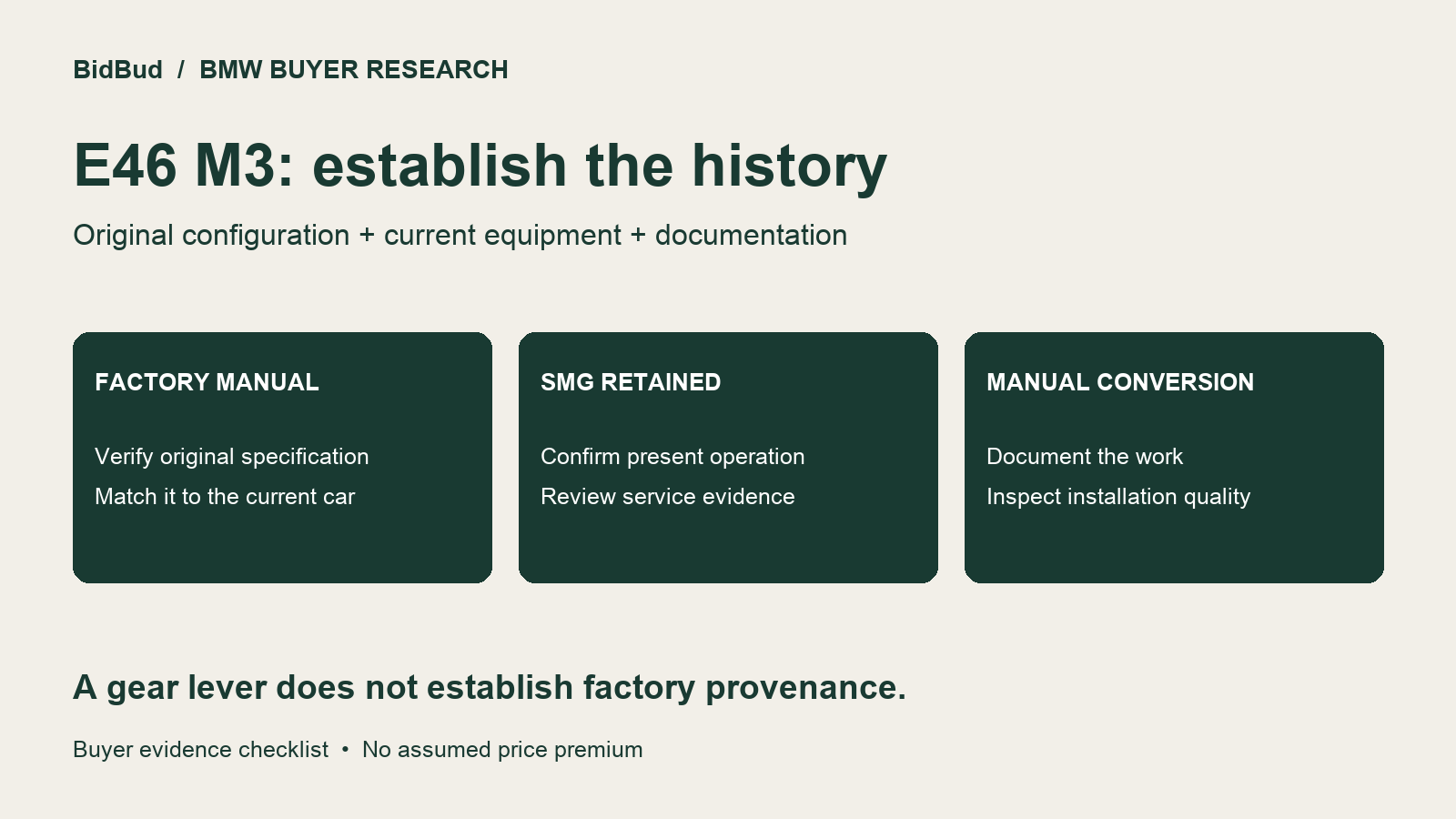
A three-pedal E46 M3 can be a factory-manual car or an SMG car converted to manual operation. Both may suit a buyer, but they have different histories. Before comparing auction results, establish what the car left the factory with, what is installed now and what evidence supports the change.
The gear knob and pedal count answer only the second question. They do not prove the original specification.
What SMG means on an E46 M3
BMW's E46 M3 profile describes two choices: a six-speed manual and a six-speed sequential manual transmission. SMG is an automated manual, with sequential shifts selected through the paddles or lever. It should not be confused with a conventional torque-converter automatic.
That shared manual-transmission background helps explain why conversion is possible. It does not mean a conversion is only a change of gear lever, or that every converted car has received the same work.
Classify the car before discussing price
- Documented factory manual: Original configuration records support manual delivery, and the current car matches that history.
- Documented SMG-to-manual conversion: Original records identify SMG, and invoices describe the subsequent conversion.
- SMG retained: The car remains in SMG form; examine its own condition and service history.
- Configuration unresolved: The available records do not establish the original specification or the work performed.
Keep the last group unresolved until stronger evidence appears. A seller's description can start the inquiry, but a photo alone cannot settle factory provenance. Ask for original specification documentation, the relevant service history and, where needed, assistance from a BMW specialist.
The conversion paperwork checklist
Request the date and mileage of the conversion, the workshop identity, an itemized invoice and the parts or transmission used. Ask whether the original gearbox was modified or another gearbox installed, and what electrical and coding work accompanied it.
Lang Racing's technical explanation describes mechanical changes including bellhousing preparation, clutch controls and shifter installation. It also explains the importance of wiring and recoding for functions such as cruise control and reverse lights. This is a reason to inspect the actual work, not a promise that every car needs an identical parts list.
Redish Motorsport likewise describes mechanical and electrical integration and emphasizes differences between conversion approaches. An invoice saying only “manual conversion” leaves important questions unanswered.
Use this short seller request:
“Please provide the original transmission specification, conversion date and mileage, itemized workshop invoice, gearbox details, and a description of the wiring and coding completed. Are any functions inoperative, warning lights present, or follow-up repairs outstanding?”
What to ask an independent inspector
Ask a qualified BMW specialist to review the conversion records against the car. Useful inspection questions include whether the installation and wiring appear properly completed, whether gear selection and clutch operation behave consistently, and whether relevant controls and warning systems function as intended.
The inspector should determine the appropriate diagnostic and road-test procedure. A clean-looking interior or a short shifting video is not a substitute for that inspection. Review the rest of the vehicle as well: proving a conversion was completed does not establish the condition of the engine, body, suspension or other systems.
How an auction listing can disclose the distinction
Bring a Trailer's 2005 M3 convertible listing, lot 238358 explicitly identifies a six-speed conversion and states that the factory SMG transmission was converted to manual operation. That is a useful example of separating current operation from original configuration.
It is not evidence of a universal conversion discount or factory-manual premium. One car's result cannot isolate the effects of transmission history from body style, condition, mileage, documentation and the bidders present.
Make the comparison fit your buying goal
If factory originality is a requirement, build your core comparison from documented factory-manual cars. If your priority is manual operation and you are open to conversions, keep converted cars in a separate group and compare the quality of their evidence and inspection findings.
Avoid a fixed percentage adjustment borrowed from an unrelated listing. Where the evidence is thin, state that uncertainty and choose a personal limit you can defend. A conversion invoice is useful documentation; it does not guarantee you will recover the conversion's cost when selling.
For broader context, read our M3 generation comparison. Then review BidBud's current buyer workflow for historical auction research and budget planning. BidBud is advisory only and never places a bid for you.
Research note: Reviewed October 9, 2026. This is a buyer's evidence checklist, not a conversion procedure or a diagnosis of a particular vehicle. No price premium, failure rate or repair-cost estimate is asserted.