Transforming the Auction Industry
Why BidBud Will Transform the Entire Auction Industry
Auctions are one of the purest forms of market price discovery. In theory, the highest-value buyer wins, the seller gets the best price, and the market sets itself efficiently. In reality, most modern auctions do not run on information. They run on emotion, timing, and uneven access to data. That imbalance is exactly what BidBud was built to fix.
BidBud is not “just another tool.” It is an intelligence layer that upgrades how auctions work for everyone involved: bidders, sellers, and the platforms themselves.
Auctions Have Digitized, But Decision-Making Has Not
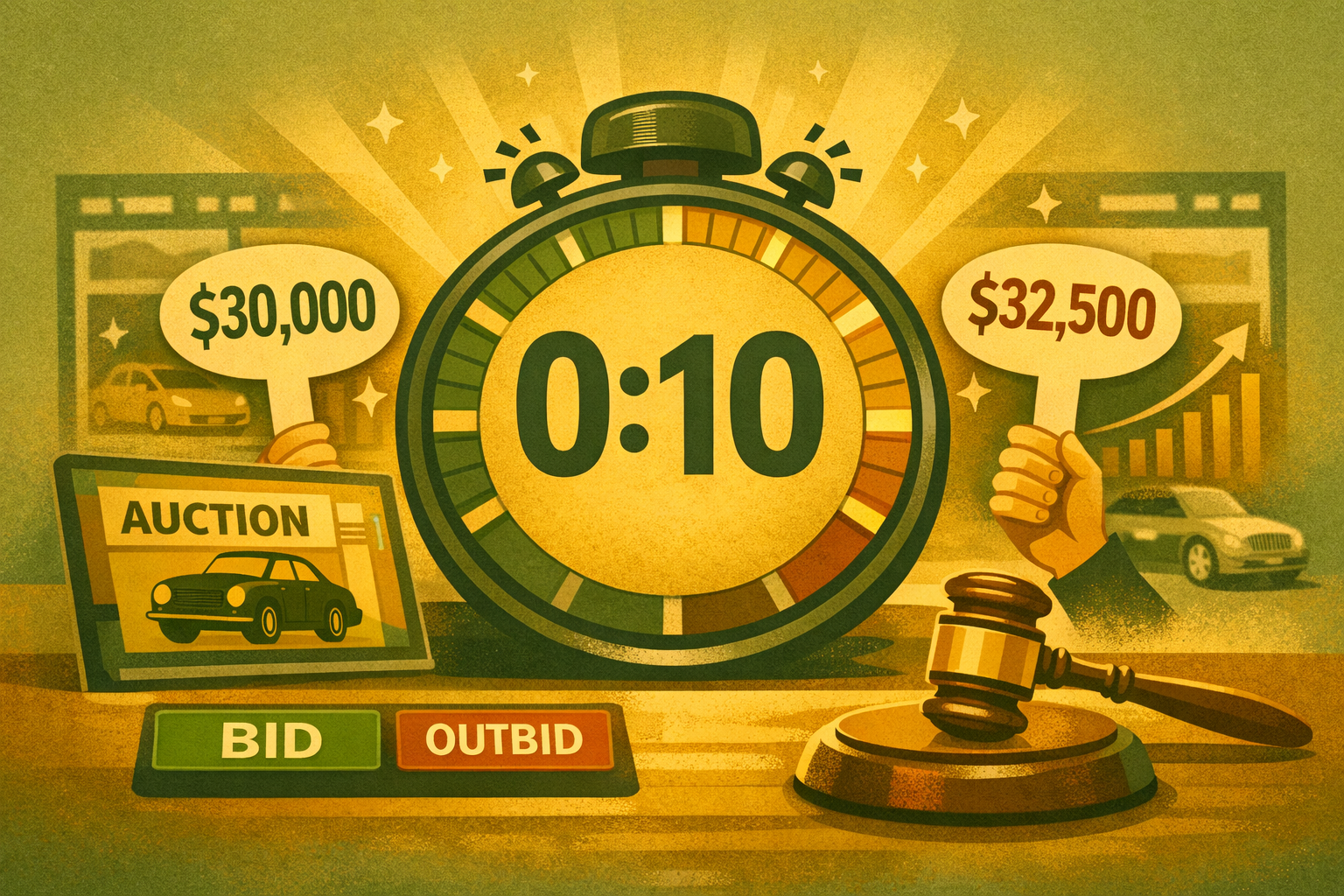
Online auctions exploded because they made participation effortless. You can bid from your phone, discover inventory globally, and compete in real time. The problem is that the bidder experience still looks like a digital version of the old world: photos, a description, a comment feed, and a countdown timer.
That format creates a predictable outcome: bidders are pushed into decisions with incomplete context, while the most informed participants keep their edge. Platforms benefit from engagement, but inefficiency shows up everywhere else: overbidding, regret, volatility, and inconsistent outcomes that feel random rather than rational.
BidBud’s core thesis is simple: when you give people the right information at the right moment, you change behavior. And when you change behavior at scale, you change the market.
The Real Problem Auctions Don’t Solve: Information Asymmetry
Most auctions are not “who values this most,” they are “who understands this best, fastest, and under pressure.”
A skilled bidder is not just someone with money. It is someone who can interpret market history, detect momentum, understand how competition behaves, and avoid psychological traps that auctions reliably trigger. That is why even “smart” bidders lose to timing, crowd behavior, and hidden signals they cannot see.
BidBud closes that gap by turning messy auction environments into structured decision systems. Instead of forcing bidders to improvise, it gives them:
- Comparable history that actually matches (not just generic comps)
- Forward-looking price context (not backward-looking averages)
- Real-time momentum and competition signals
- Strategy guidance that adapts as the auction evolves
When that becomes the norm, auctions stop being a game of nerves and start becoming a game of informed choice.
BidBud Turns Auctions Into a Predictable System
Today, most bidders “feel” their way through auctions. They rely on superstition: bid early to set the tone, wait to snipe, jump in to scare people off, stay active to show strength.
Sometimes those tactics work. Often, they fail, because the context changes every auction. BidBud’s advantage is that it does not rely on one-off instincts. It learns from patterns across thousands of auctions and translates those patterns into live guidance.
This is the shift BidBud represents:
From gut feelings → to data-driven decisions.
From hindsight → to prediction.
From isolated listings → to market intelligence.
Once auctions become measurable, they become improvable. That is how entire industries change.
How This Transforms Every Stakeholder in the Auction Ecosystem
For bidders: confidence replaces chaos
Bidders do not just want to win. They want to win on terms they can justify later. BidBud helps bidders understand when to engage, when to hold, how competition is behaving, and when walking away is the smart move. It keeps emotion from becoming punishment.
The result is a healthier bidder base:
- fewer regret-driven dropouts
- more repeat participation
- less irrational overspend
- stronger trust in the platform
For sellers: better outcomes become repeatable
Most sellers guess on reserve, timing, and presentation. BidBud’s intelligence can show what drives performance and what consistently suppresses it, so sellers can price smarter, list smarter, and choose strategy with evidence.
When sellers can predict outcomes more accurately, they list more inventory. That increases liquidity and strengthens the entire marketplace.
For platforms: higher conversion, higher GMV, better retention
Platforms already understand psychology. Timers, notifications, bid increments, and hype dynamics drive engagement. But engagement is not the same as trust.
BidBud offers platforms something more valuable than excitement: repeatable confidence at scale. When bidders feel informed, they bid more, come back more often, and bring others with them.
And there is an additional upside: BidBud creates premium product surfaces platforms can monetize, like “Pro” tiers, intelligence dashboards, and data products that enhance both the buyer and seller experience.
The “Market Value” Upgrade: From Static Prices to Live Indices
In most auction categories, “market value” is treated like a historical number. It is what the last few sold for. That misses what actually moves markets: micro-trends, seasonality, attention, and shifts in buyer appetite that happen in real time.
BidBud changes the definition of market value by making it dynamic:
- real-time pricing curves
- model or category-specific indices
- momentum shifts that show when demand is rising or fading
- context that updates as new auctions close
When markets get a true data layer, volatility becomes understandable instead of mysterious. That transparency attracts more participants, including serious buyers who previously avoided auctions because they felt too unpredictable.
BidBud Is Bigger Than Vehicles: It Is the Auction Intelligence Layer
Car auctions are the perfect proving ground because they combine:
- high emotion
- high price variance
- deep historical data
- fast-moving bidder behavior
But the underlying mechanics exist everywhere:
- collectibles and memorabilia
- watches and luxury goods
- art and design objects
- industrial equipment
- real estate auctions
- even high-frequency digital auctions that rely on competitive behavior
Wherever auctions exist, the same truth applies: behavior and information drive outcomes. BidBud is built to make that system legible, measurable, and strategically navigable.
The Endgame: Auctions That Learn
The long-term future is not “AI that bids for you.” The future is auctions that get smarter because the market finally has a feedback loop.
BidBud points toward a world where:
- platforms understand why auctions perform the way they do
- bidders receive guidance that adapts to the live environment
- sellers can choose strategies based on measurable probability
- auction outcomes become less random and more trusted
And when that intelligence is integrated into platforms directly, auctions evolve from static marketplaces into dynamic ecosystems of insight.
Why This Matters Right Now
The auction industry is growing, globalizing, and becoming more competitive. At the same time, buyers are overwhelmed, attention is fragmented, and “winning” often feels like luck.
BidBud exists because the next era of auctions will not be won by the loudest timer or the fastest refresh. It will be won by the platforms and bidders who understand the data, the behavior, and the moment.
BidBud transforms auctions by doing what auctions have always needed but never had: real intelligence, delivered in real time, at the point of decision.