Bring a Trailer Bidding Strategy: How to Bid Without Overpaying
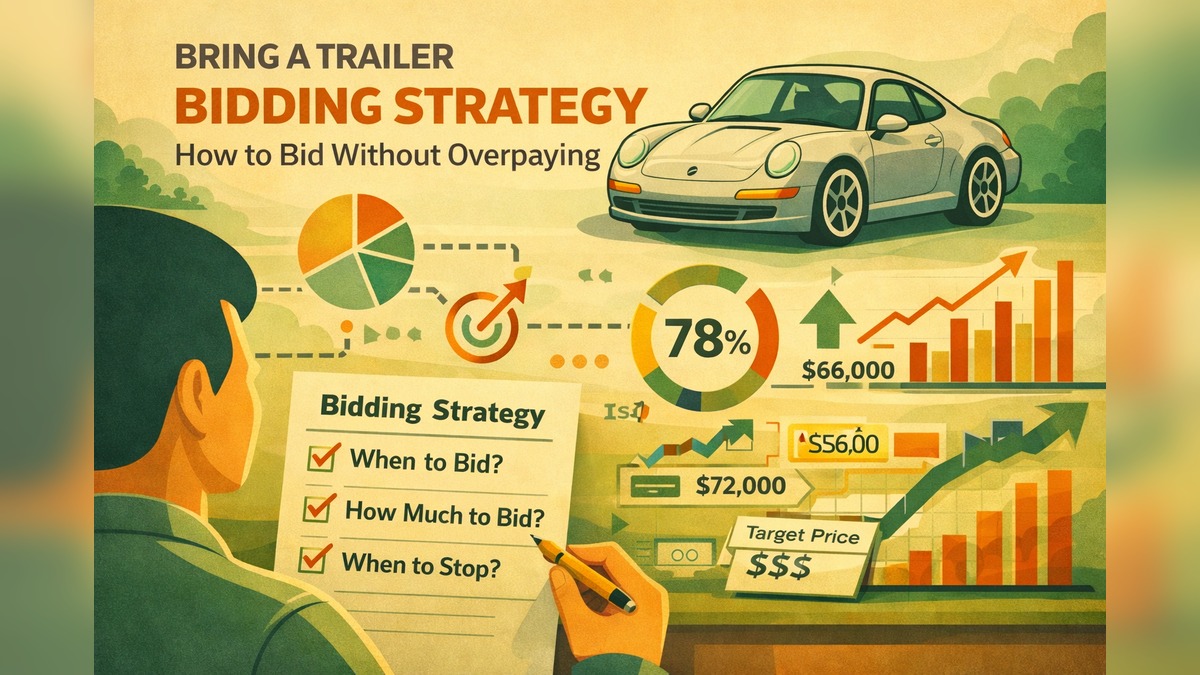
Most bidders do not overpay on Bring a Trailer because they lack passion. They overpay because they treat the final minutes as a test of nerve instead of a test of process. A reliable bring a trailer bidding strategy starts before the auction gets exciting: define your all-in ceiling, pressure-test comparable sales, and decide what evidence would justify stretching your cap. This guide is built for BidBud users who want to get the most out of the tool.
Why Bring a Trailer Demands a Process-First Approach
Bring a Trailer attracts informed enthusiasts, detailed listings, and active comment threads. This combination is useful, but it also increases noise near the finish. If your plan is only "wait and bid late," you are still exposed to emotional bidding, fee blind spots, and weak comp selection. The better approach is to lock your decision rules before the final window opens, then execute those rules with discipline.
If you are arriving from the Homepage, treat this page as your execution playbook. If you already use the buyer report, this framework helps you turn that research into a single, defensible bid ceiling.
Set a Ceiling Before You Place the First Bid
Your ceiling is not a 'vibe'. It is a number derived from market evidence and your own risk tolerance. Start with a target valuation range, then back into the highest hammer number you can accept once platform fees, transport, and immediate post-purchase spend are included.
The Four-Input Ceiling Model
- Market anchor: Your adjusted comp range for similar condition, spec, and mileage examples.
- All-in costs: Buyer fee, transport, taxes, and first-round maintenance budget.
- Risk buffer: A deduction for unresolved history, thin records, or hard-to-verify modifications.
- Opportunity cost: What you are willing to pay versus waiting for the next comparable car.
Document these inputs before bidding starts. If one input changes, update the ceiling once. Do not repeatedly recalculate during the final minutes unless new, material facts appear.
Practical Cap Checklist
- Define a maximum all-in budget in dollars.
- Convert that budget into a maximum hammer price.
- Write down two reasons you would still walk away, even if you can technically bid higher.
- Confirm your payment and logistics plan so urgency does not cloud judgment.
Timing Strategy: Enter Late, But Never Enter Blind
Late bidding can be effective, but only when you already know your number. Bring a Trailer uses end-stage time extensions when bids arrive near close, so the final sequence often becomes a series of short decision windows.
Instead of chasing every increment, run a three-step timing routine: observe early signals, wait for genuine price discovery, and engage once your valuation framework is complete. Entering late without comp confidence is still guesswork. Entering late with a fixed ceiling is strategy.
Use Comparable Sales Like an Analyst
Comp work should narrow uncertainty, not create false precision. Weight recent sales more heavily, but adjust for condition depth, documentation quality, originality, color desirability, and known mechanical exposure. One headline sale can distort expectations if the listing quality or bidder mix was unusual.
Quick Comp Weighting Framework
- Tier 1 comps: Same generation and similar spec with strong documentation.
- Tier 2 comps: Same model with meaningful condition or originality differences.
- Tier 3 comps: Older or broader references used only to understand market direction.
If your comp set is thin, state that clearly in your notes and tighten your risk buffer.
Fee Math: Think in All-In Cost, Not Hammer Price
Many buyers lose discipline because they anchor on hammer price and mentally defer the fee impact. That mistake gets expensive in the last minutes. Build a fee-aware model before auction day, then test two to three bid outcomes so you know exactly where your all-in threshold breaks. BidBud does this for you, utilize it.
Confirm your fail-safe number.
Reserve Context and Comment-Thread Signals
Reserve status, seller responsiveness, and documentation quality can change risk faster than price action. A clean, responsive thread does not guarantee a good buy, but it does reduce uncertainty. A defensive or inconsistent thread may justify a tighter cap, even when the car itself is desirable.
Use comment behavior as a risk input. The right strategy is to reward verified clarity and penalize unresolved ambiguity. If new facts appear late, update your ceiling once, then return to your framework.
Common Mistakes That Lead to Overpaying
- Raising your cap because the car "feels unique" without evidence that comps support the premium.
- Ignoring fee math until after the hammer falls.
- Treating a fast comment thread as proof of value.
- Bidding against a rival bidder instead of bidding against your own plan.
- Skipping a post-auction review, so the same errors repeat.
Decision Framework: Bid, Pause, or Walk
When the auction tightens, use a simple decision framework:
- Bid when your next increment remains below your all-in ceiling and your core facts are still intact.
- Pause when new information appears and requires a quick but real reassessment.
- Walk when the next increment breaks your ceiling or unresolved risk invalidates your prior assumptions.
Discipline is not missing out, it is preserving capital for the next high-confidence opportunity.
Auction-Day Operating Plan for Serious Buyers
On auction day, treat your process as merely a checklist. Keep your comp notes, cap model, and fee assumptions in one place so you are not switching context during critical moments. If your prep is scattered, your decision quality drops as the timer pressure rises.
90-Minute Pre-Close Routine
- Reconfirm your top three comps and their condition context.
- Check comments for new disclosures, fresh photos, or unresolved questions.
- Run your latest all-in scenario in your fee model.
- Set your final walk-away number and write it down.
During the closing sequence, do not negotiate with your own plan. The most expensive mistake is changing your ceiling because the auction feels like a one-time chance. If the car is still attractive at your number, bid with confidence. If it is not, protect your downside and move on. BidBud buyers who track outcomes across multiple auctions are likely improve faster by staying consistent than by improvising in one high-drama finish. Improving faster in this context includes, but is not limited to: winning the desired vehicle at a more desirable price, underpaying for vehicles, or finding a similar vehicle after losing the originally desired one.
After the auction, run a short debrief. Did your comp assumptions hold? Did fee math align with the final market behavior? Did comment-thread risk match the outcome? That review loop is how a one-off strategy becomes a repeatable edge.
Build Your Bid Plan Before the Final Minute
A strong bring a trailer bidding strategy is not about gaming the clock. It is about combining comp quality, fee-aware math, timing discipline, and clear walk-away rules. Buyers who do this consistently are still aggressive, but they are aggressive inside a system that protects downside and improves long-run results.
Use this guide alongside BidBud resources, confirm time-sensitive platform details before publishing, and run one last ceiling check before the close.
Get a custom buyer report before your next BaT bid.