Reserve not met on Bring a Trailer: what happens next
Reserve not met on Bring a Trailer: what happens next
By BidBud · October 27, 2026
“Reserve not met” means the auction’s high bid did not reach its reserve. It is not proof that the car sold for that amount, and it does not establish that the car will never sell. For a buyer, the next task is to check the official post-auction process while keeping the same research and budget discipline used before the close.
Start with the platform’s post-auction instructions
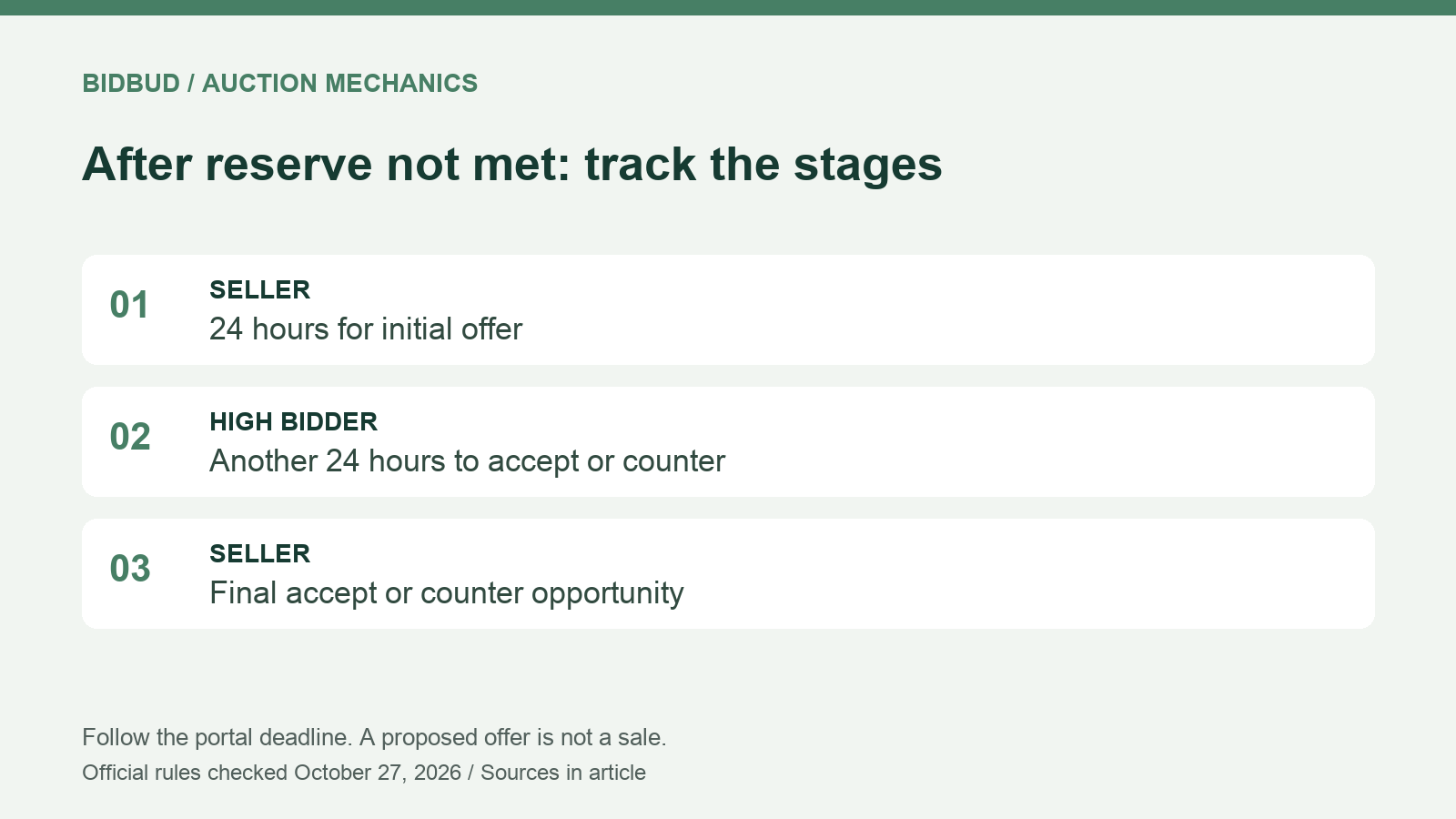
BaT’s process overview describes a secure post-auction offer portal. Its more detailed official process update, updated June 2, 2025 and checked for this article, explains the sequence:
- The seller has 24 hours to make an initial offer to the highest bidder.
- The highest bidder then has another 24 hours to accept or make a counteroffer.
- The seller has a final opportunity to accept or issue a final counteroffer.
These are successive stages, not one shared 24-hour period for the entire negotiation. The update does not specify every final-stage deadline. Follow the instructions and deadline displayed for your transaction, and ask BaT if they are unclear. Do not assume a public comment or informal message completes the portal process.
The overview does not promise that an agreement will be reached. It also does not say every observer can enter the same negotiation. If you were not the high bidder, do not assume that seeing an unsold listing gives you access to the high bidder’s offer opportunity. Ask the platform about the available route for your situation.
Keep three amounts separate
Create a record with an entry for each of these, leaving an unknown field blank:
- Auction high bid: the highest amount recorded during bidding, together with the reserve-not-met result and closing date.
- Proposed offer: a later proposed amount and its current status. An offer awaiting a response is not a completed sale.
- Reported agreed price: an amount supported by an explicit later sale outcome. Preserve the source and the date you checked it.
This small record prevents two common research errors: treating an unsold high bid as a transaction, and counting the high bid and a later agreement as two separate sales. If the final price is not public, keep it unknown. A seller’s statement that a deal happened does not supply the missing number.
Our 992 GT3 RS case review shows why this distinction matters when a listing later records a sale via offer. That article examines selected examples; it does not establish how often post-auction negotiations succeed across BaT.
A buyer’s decision sheet before responding
Identity and condition: confirm that you are still evaluating the same car, equipment and disclosed history. Write down any unresolved inspection or documentation question. A changed price does not answer a condition question.
Complete cost: put the proposed vehicle amount beside the applicable platform fee and your transport, tax, registration and repair assumptions. Use the transaction’s actual fee information. Do not assume a post-auction agreement is fee-free or that an earlier credit-card hold proves a final fee was collected.
Personal limit: compare that total with the limit you had before the auction ended. If it exceeds the limit, identify what new evidence justifies reconsidering it. “I was the highest bidder” is a description of the auction, not additional evidence about the car.
Deadline and response: note the deadline displayed in the official process, the response you intend to make, and what confirmation you receive. If the instructions are unclear, contact BaT rather than inventing an extra response window.
An example of keeping the decision consistent
Suppose your personal vehicle-price ceiling was USD $40,000 after allowing separately for acquisition costs. A hypothetical auction ends below reserve at $38,000, and a later proposal is $42,000. The proposal is $2,000 above your existing ceiling; the fact that bidding stopped at $38,000 does not make $42,000 affordable or appropriate.
You can review whether genuinely new information changes the assessment. If nothing material has changed, preserve the original ceiling. This is a budgeting example, not a suggested offer, a statement about available counteroffers, or a valuation of a real vehicle. Check the choices actually offered by the platform.
If an agreement is reached—or is not
After an agreement, follow the platform’s transaction instructions and confirm the payment, documentation and collection arrangements through the appropriate channels. Keep the agreed vehicle amount separate from the amount needed to complete the purchase. An accepted price is one stage in the transaction, not evidence that title transfer and delivery have already happened.
If no agreement is confirmed, retain the unsold auction outcome in your research. You can revisit the source later, but do not assume a relisting, a lower reserve or an undisclosed sale. A missing update remains missing information.
Use our buyer-fee guide for fee calculations and credit-card hold guide for the distinction between a hold and a charge. BidBud supports research and planning; it does not negotiate with sellers or place bids for you.
Process checked October 27, 2026. The worksheet and numerical example are original BidBud guidance, not a claim about any bidder’s outcome or the probability of reaching a deal.