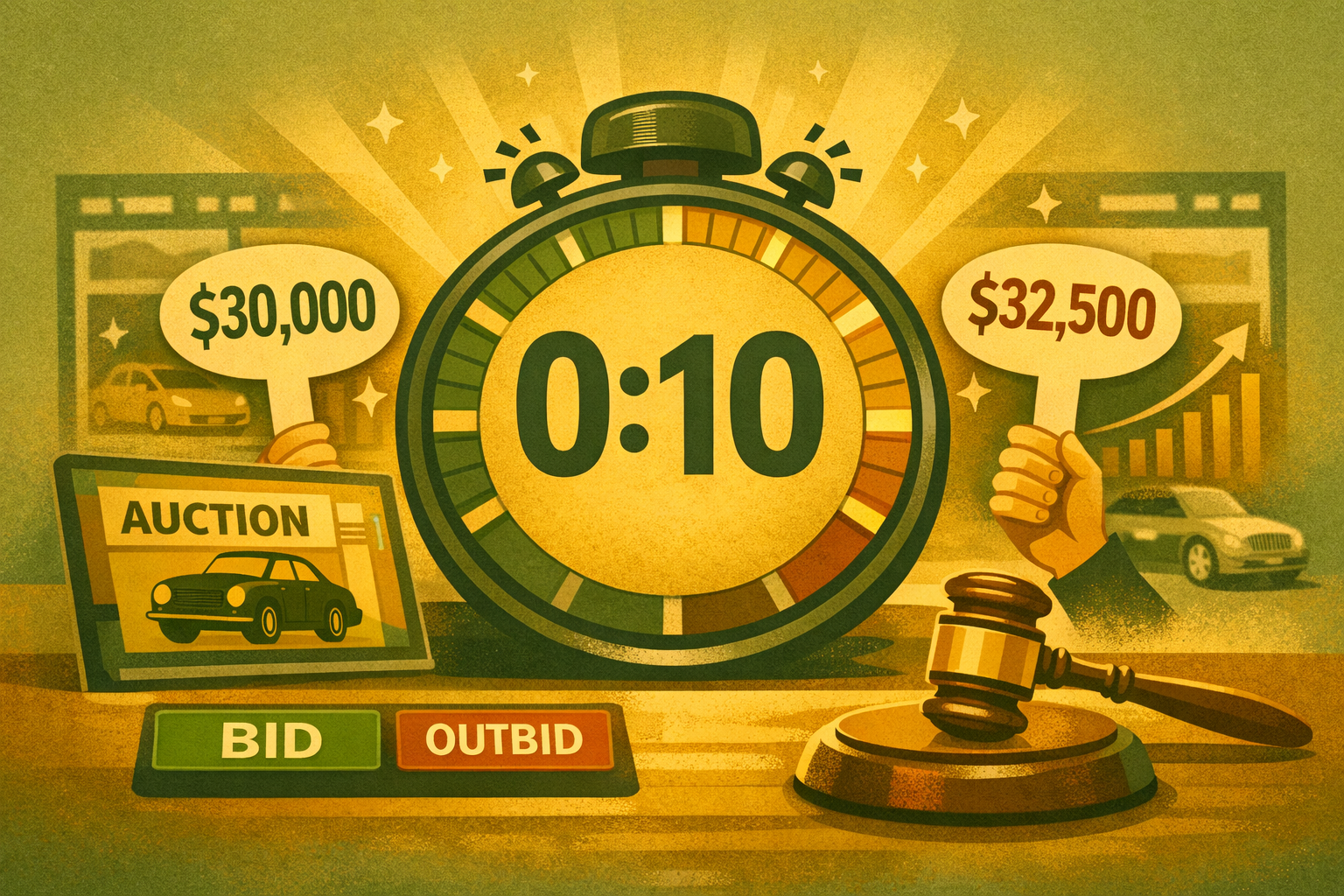
What is a Bidding Strategy?
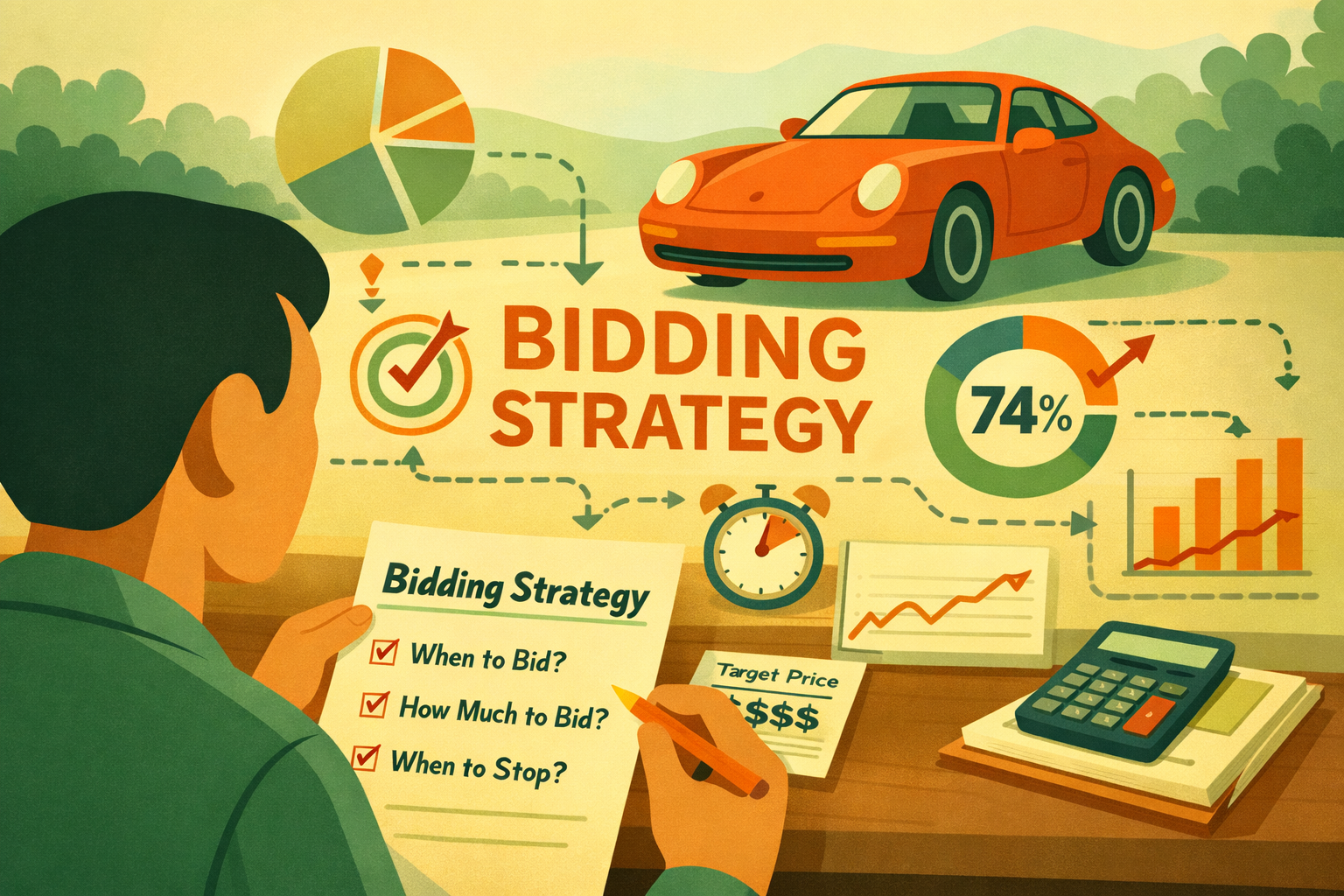
What is a Bidding Strategy? A 'no-b***s***' guide to bidding.
Online car auctions move fast, feel personal, and punish hesitation. A bidding strategy is your repeatable plan for three things:
- Whether to bid
- When to bid
- How high to bid
When you have a strategy, you stop reacting to the auction and start executing a plan.
The Core Goal
A good bidding strategy gives you one clear number and one clear approach before the final minutes get hectic.
That number is your walk-away price, built from data.
Step 1: Define Your Win Conditions
Before you even place a bid, decide what “winning” means for you:
- The exact spec you want (year, transmission, color, options)
- Your “must-haves” and your “nice-to-haves”
- Your total all-in budget (auction fees, shipping, taxes, immediate maintenance)
Write it down. If it is not written down, the auction will rewrite it for you, and you'll spend more than you expected.
Step 2: Build Your Number From Comparables
Your walk-away price should come from recent, truly comparable sales. That means adjusting for:
- Mileage
- Condition and documentation
- Options and trim
- Presentation quality (photos, video, transparency)
- Location and seasonality (some segments spike at predictable times)
This is where BidBud fits naturally. A BidBud-style workflow helps you compress hours of scrolling into a clearer range so you can set a confident cap, understand the current state of the market, and place effective bids.
Step 3: Choose Your Timing Plan
Most bidders lose money in two moments: bidding too early without a reason, or bidding too late with no room to think. Pick a timing plan that matches your personality and the listing’s activity.
This is chosen in BidBud's UI by picking a bidding strategy:
Option A: Early Positioning
You enter early to establish seriousness and test demand.
Best for:
- Listings with low early engagement
- Cars where you have strong conviction on value
Option B: Mid-Auction Pressure Test
You wait until the middle to place a “probe” bid and see who responds.
Best for:
- Auctions with steady interest but no frenzy
- Situations where you want information from the market before committing
Option C: Late Execution
You hold your fire and focus on the closing window, especially in the last 10 minutes.
Best for:
- High-traffic listings
- Auctions where early bids mainly serve as hype fuel
Pick one plan and stick to it.
Step 4: Control Your Pace and Increments
A strategy is not only about your max bid. It is also about how you climb toward it.
Here are two practical rules that can protect you:
- Bid with intention. Each bid should move you toward a goal, not relieve stress.
- Avoid micro-duels. Tiny back-and-forth raises can pull you into a rhythm where the auction is driving your decisions.
If you already know your cap, your pacing should reflect it.
Step 5: Create a Hard Stop
Your hard stop is the line that keeps a fun hobby from turning into an expensive story. You can do this in the BidBud app by adjusting the sliders in the Bidding Strategy section.
Build it like this:
- Start with your fair value range from comps
- Add your personal premium (the amount you are happy to pay for the exact spec, color, or history)
- Lock the final number and treat it as final
A strong strategy also includes a recovery plan: if you lose, you move to the next listing with the same discipline instead of “making it back” on the next auction.
Three Simple Strategies That Work
Here are three simple strategies bidders can execute without overthinking.
1) The Anchor Strategy
You place an early bid that signals confidence.
Works best when the auction is quiet and the car is under the radar.
2) The Probe Strategy
You place a bid midway through to identify real opponents.
Works best when you want market feedback before committing.
3) The Close Strategy
You focus on the final stretch and prepare for extensions.
Works best in high-demand listings where the real price discovery happens at the end.
None of these is “the best” universally. The best strategy is the one you pick in advance and apply consistently.
How BidBud Helps You Execute
BidBud is built around turning chaotic auction signals into usable context, so your strategy stays intact when the pressure rises towards the end of the auction. The bidder-facing outcomes look like:
- A clearer price range from comparable auctions
- Real-time momentum signals (how fast the bidding is accelerating)
- Decision support that helps you stick to your number
That is the point of a strategy: fewer emotional bids, more deliberate wins. Bid with BidBud.